Showing posts with label LOST. Show all posts

Sunday, February 14, 2010

Woof

So my plan for LOST this season was just to relax, try to stop irresponsibly speculating at every possible moment, leave my episode critiques to a minimum and enjoy the concluding chapter of a story the producers spent five seasons spinning. I was able to stick to that plan for just under three episodes.

I was not a happy camper with “What Kate Does”. It seemed like a bizarre way to use one of the series’ final fifteen episodes – a curious detour on our way to answers. There is so much to do and so many things to explain, but we were served up with a warmed over episode potmarked with clichéd vagaries and tired back stories.

I suppose I shouldn’t be too critical of any episode that focuses on Kate as that means a lot of screen time for Evangeline Lilly. But I have a tough time caring about her character within the context of the safe-815 world. The potential intrigue and excitement of the characters that landed safely at LAX is how their past lives have been different from the ones that we have already understood and how the characters themselves are different than their on-island counterparts. But with Kate we got exactly what we were expecting – a dogged fugitive with the occasional sentimental weakness. Her narrative orbit between Jack, Sawyer and Aaron is well-worn now, known to the viewer and never all that interesting in the first place. This episode pioneered no new territory. There was no clarification on her pre-815 life or any suggestion that Kate might be somehow different than the same character we would have expected to find. So effectively what Kate did was bring whatever momentum was built from the season premier to a screeching halt. There seemed to be about 20 minutes worth of story that was stretched into the full episode, which probably explains my surprise when I fast-forwarded through what I thought was the second commercial break, but was in fact the last of the episode.

Though to be fair, it wasn’t entirely Kate’s fault the episode collapsed faster than the 4-toed statue. I am quickly growing tired of the Temple captivity and worry that the location itself symbolizes season 6 as a whole – a once intriguing location that once reveled leads only to a disheartening let-down. If things don’t turn around quickly, the temple could be to season 6 what the Hydra was to season 3, shackling the story telling because the producers think the location is much more interesting than it really is.

Perhaps the temple’s most interesting superpower isn’t the ability to heal the lifeless, but actually to compel those within its walls to speak in unnecessary vagaries. I mean seriously…why don’t they actually just tell Jack what the hell is going on. The stupid euphemisms and vague descriptions are getting really old, really quickly. It was a fine tactic to use in season three – loosely define what is happening so the audience has a whet appetite for three more years of being strung along. But guess what? We made it. You made it interesting enough for us to wait it out for six years and interminably long breaks between seasons. We are sufficiently interested in the show. We aren’t going to leave you now. We have too much invested and too much hope that the payoff will meet our buy-in. SO STOP EXPLAINING THINGS USING WORDS LIKE “INFECTED”, “CLAIMED” OR “CANDIDATE”. EXPLAIN TO US WHAT THE HELL IT MEANS AND WHY WE SHOULD CARE. THERE ARE ENOUGH DAMN MYSTERIES…GIVE US THE PAYOFF. WE ARE SMART ENOUGH TO PICK UP YOUR KIERKEGAARD REFERENCES AND OBSESSION WITH ALICE IN WONDERLAND…WE CAN UNDERSTAND WHATEVER DARKNESS IS TRYING TO GET NEAR SAYID HEART IF YOU WILL JUST GODDAMN WRITE IT DOWN FOR THE ACTORS TO SAY IT. WHY THE HELL DOESN’T JACK ASK “WITH WHAT?” WHEN HE IS TOLD SAYID'S IS “INFECTED”? HE IS A GODFORSAKEN DOCTOR DAMNIT. HE CAN UNDERSTAND AND WE CAN TOO. WE ARE NOT CHARLIE BROWN AND YOU ARE NOT LUCY. LET US KICK THE DAMN FOOTBALL…WE’VE WAITED LONG ENOUGH. I feel sometimes like the producers treat us like we are in second grade. Like they are a parent after a car breaks down and we ask what happened, but the only thing our parents will tell us is “the car is sick”. Scratch that…they would tell us the “car is infected” and leave it at that. That is more frustrating than trying to explain why Claire would get back into a cab with a woman who held a gun to her head. Wouldn't she have gone right to the police after getting forced out of the cab?

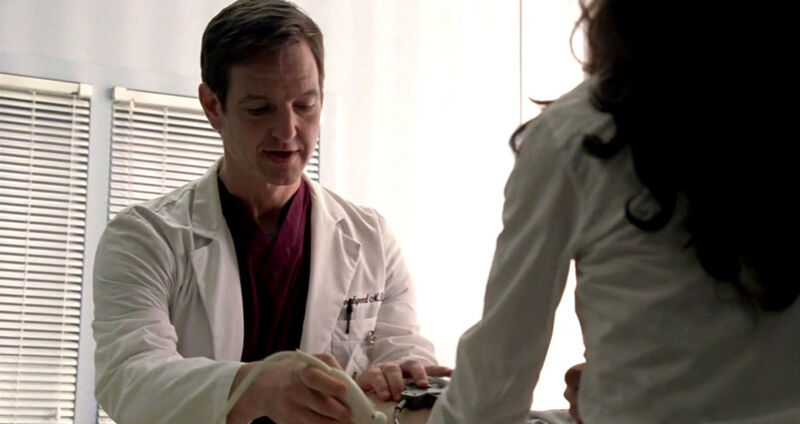
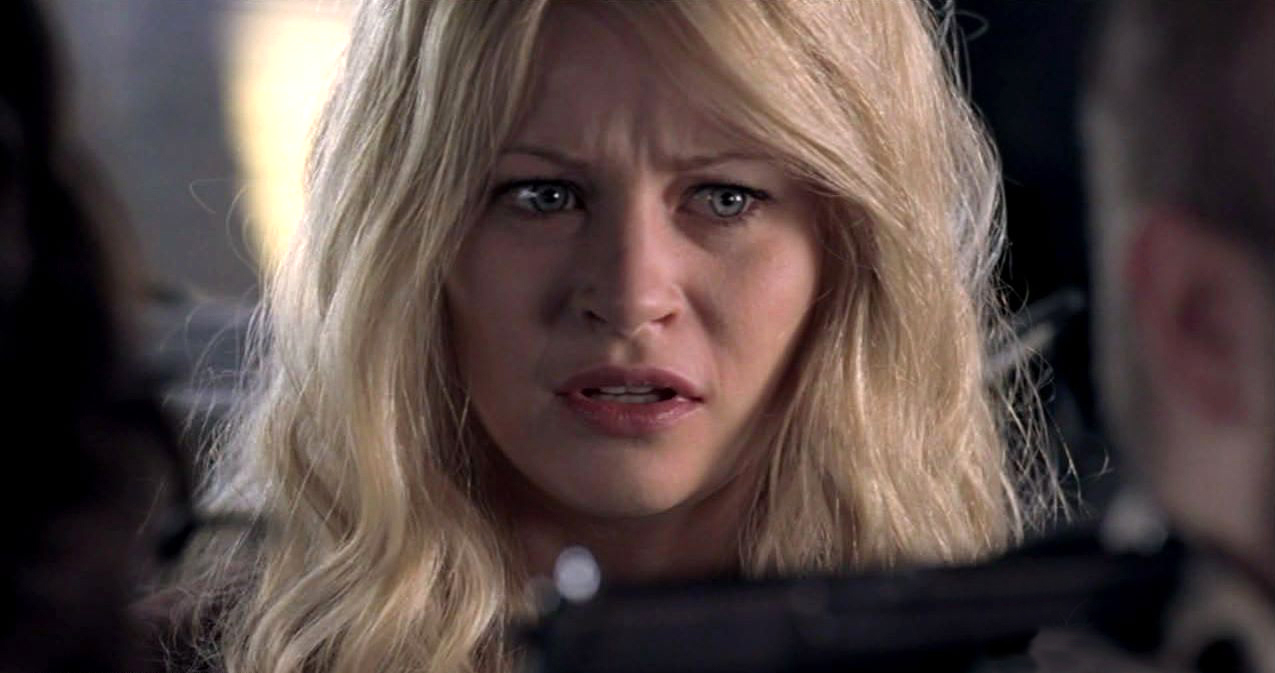
That being said, I suppose there were a few cool moments. Ethan showing up as Claire’s doctor was interesting for sure and gave me hope that Ben and Juliet will be – or already are – interacting with the 815 passengers in some way in the future. And I suppose the return of Claire was interesting as well, as she has now become the Island’s new Rousseau – a deranged wanderer who has lost her child after giving birth on the Island. Kate’s moment of recognition, driving by Jack outside of the LAX terminal, was also significant, but only so because it was the first time someone other than Jack seemed to stir a lost recognition in the fog of their mind. But the moment was fleeting.

The “nothing happened” complaint is one heard frequently, though it is often misplaced. The importance of a single episode is rarely immediately evident and the lines of demarcation in a serialized drama like LOST should be unimportant. It is all just one big story. Nothing is self-contained. And until we get a proper look at the entire mosaic, the importance of each tile can’t be fully appreciated or criticized. I am just not sure right now what this piece adds, especially with precious few left to reveal.

Friday, February 5, 2010

The Beginning of the End

As you can see, commitment to my blog is tenuous at best, negligent at worst. I have not posted since the day John McCain decided he would try to skip the first Presidential debate so that he could help craft a bailout package in the Senate. This is what happens when you spend your free time organizing Family Feud parties. But here I stand (or type), shameful of my neglect, an absentee father who now must face the sobering realization that so many one-time moments have passed without me there - or at the very least, commenting upon them to an audience of no more than 4.

So I have no idea whether I will have the perseverance nor enough warmed over insight every week to scribble my thoughts about the most recent episode of LOST, but - damnit - I am going to try.

And so we start with the very literal beginning of the end. I found myself pleasantly disoriented with the season premier - excited by the prospect of a new narrative structure and the full out gauntlet of answers to questions that hopefully won't lead to more questions. The former is likely to be more satisfying than the wicked pursuit or expectation of the latter.


After 3 seasons of exclusive flashbacks, season four unleashed the narrative shackles, as flash forwards told the story for the O6's departure from the Island, while last season was the skull-clowning time travel narrative, which admittedly I found far too abstract and confusing to enjoy fully. And no more than 5 minutes into Season 6, the curtain was pulled back on this year's narrative engine - the flash sideways. While this may have (read: did) annoy a lot of you, I ate it up. I think the assumption was that if the A-bomb detonation did in fact work, everything would be exactly the same for the characters until the moment they should have crashed onto the island. No, sir. Things on the plane were different - some slightly askew, others wildly off-base. Obvious examples are Hurley's insistance that he is the luckiest man alive, Shannon's absence from 815 and, most strangely, Desmond's presence. But I want to point to a few smaller things. Sayid had an Iranian passport, not an Iraqi passport; Sawyer certainly didn't look as if he just mistakenly killed the wrong man; Desmond didn't look as forelore as he should be if he were still trying doggedly to win the approval of Charles Widmore; and also I don't believe that Sun and Jin are yet married. Sun is referred to as Miss Paik at the border and Jin isn't wearing a wedding ring. None of the characters appear to have the exact life experiences leading up to 815, but granted, the differences are sometimes subtle and based in irresponsible speculation. I also don't think you can assume Claire is pregnant - we didn't get a complete view of her in the taxi - or that Locke's biological father pushed him out of a high rise. Understanding how these characters are different from the ones we have come to know - and how the two personas are ultimately reconciled - offers a distraction from the cascade of raw revelations.


This is why I hope to find the flash sideways (there has to be a better name for it) so compelling; to see how the lives of the people on 815 would have intertwined even if they plane had not crashed on the island; enjoying the dramatic irony behind Locke and Jack's interactions - two former (current?) adversaries playing out their relationship in an entirely different way. Kate and Claire - Aaron's two "mothers" - and what happens after the taxi squeals out of LAX. These are two small examples, but the new possibilities for the characters and their outcomes gives the flash sideways a refreshing take on characters we have gotten to know so well in the past six years. It also begs the questions as to where are others and do they already have some type of relationship with those on 815. Where are Farraday and Widmore? Is Penny somehow with Sawyer? What about Juliet and Ben since they aren't on the Island? (By the way, I don't think we can assume the bomb directly caused the Island to sink. There is a difference between what the bomb caused and what the bomb enabled. Just something to keep in mind). I think this will provide a nice intrigue to the weighty hopelessness that saddles the same characters currently on the island...

So long as the two narratives somehow meet. I am going to be terribly disappointed if I find out that LOST's final season turns out to be a Choose Your Own Adventure where we can pick the world that we want to believe is the most true - or most convenient. (I am also going to be disappointed if the lesson from LOST is the best way to deal with a painful past is to erase it.) I don't want to have Island Jack find redemption in 1 world, but remain adrift in another. There is room for ambiguity, but not for two wildly divergent outcomes. Which leads to the question of what nudges these two narratives (which are 3 years apart) onto a collision course? The easy answer for the safe-815 flight is Jack. Jack seemed to be unable to stir the embers of his mind enough to light the flame of memory when he saw Desmond. In fact, he appeared to be the only one to have some semblance of recognition. But saying that Jack will figure it out is too easy, so I am going to go with Desmond. We have no idea where Desmond is exactly after Ben shot him and sent him to the hospital, but we know 2004 Desmond is on 815 and he has already shown himself to not be constrained by the limits of time and space. I will tenuously assume that is still the case and say it is him that sends the 2004'ers to 2007.


As for the trigger sending the on-island narrative toward their safe 2004 counterparts, I vote for Sawyer. The closing scene of last season - Sawyer losing Juliet down the drill hole - was too dramatic and emotional to be a false climax. To bring Sawyer and Juliet back together - even briefly - diminished emotional wallop of their supposed final good bye and seemed like a strange way to spend 15 minutes of an episode. Unless it serves a larger purpose. And I think that purpose was Juliet seeding in Sawyer's mind that Jack's plan did indeed work, at least in some capacity. My guess is that it's a pivotal piece of information that informs decisions farther down the line as Sawyer - or Miles - shares that bit of information with others on the island.


That assumes that Flocke/Man in Black/Smokey leaves anyone else on the Island alive to share the information with. I appreciated the confirmation the Smokey, Flocke and the Man in Black were all one in the same - something that was hinted at during last season's finale - along with the indication that the ash line does in fact keep Smokey at bay and I am trying to grapple with those implications in my mind. I think the most curious impact is on Jacob's Cabin. We have long been lead to believe that the cabin - which was encircled by an ash/soot line - was inhabited by the mysterious Jacob, but last year's finale suggested that Jacob hadn't been there in a very long time. Which begs the question, "Well, who was Locke talking to and hearing in there?" My guess would be Smokey/Man in Black. Given what we know now about Smokey's difficultly penetrating ash lines, we have to think that maybe the ash line around the cabin was keeping something/one inside rather than the reverse. If you remember, the first visit to Jacob's Cabin - which are some of my favorite scenes in LOST - was made by Ben and Locke. In the cabin, Ben feigned a conversation with Jacob, while Locke called his ruse...until Locke heard someone say "Help me" and then the house started rockin'. While the cabin shook, a figure flashed briefly on the screen, one that looked strangely like Locke, albeit with longer hair.


One the second trip to the cabin, Locke entered, this time without Ben, only to find Christian sitting in the rocking chair, who told John that he needed to move the Island. At each stage, it was Locke who was spoken to - who was given instructions. It is as if whoever inhabited the cabin needed Locke - and only Locke - some grander reason. Locke's use appears now to be the vehicle through which the Man in Black was able to fully make it through the loophole he so desperately sought. And once Locke's dead body arrived back on the island, the Man in Black was able to escape his cabin banishment and get entirely through the loophole, allowing for him to kill Jacob. Remember when Ilana's group found the cabin after Flocke was leading the others to the statue, the soot/ash line was broken, which I took to mean as a sign of escape. Now there are problems with this. The smoke monster appeared a number of times and in a number of different places well before Locke's dead body would have allowed for the Man in Black to escape. And if Richard knew Jacob lived beneath the statue's foot, why didn't he tell Ben and Locke they were going to the wrong place/talking with the wrong people? But to me, this connection between Locke and whatever or whoever was in the cabin is too strong for their not to be something grander beneath the surface. Locke seems to have been a pawn in the Man in Black's larger scheme. For some reason, Locke had to be the vehicle through which the loophole was opened and perhaps Locke's entire life was orchestrated to fulfill the Man in Black's desire to kill Jacob. To be in a place and a position so that the loophole could be exploited and vengeance had. I would not be shocked if we find out the person who caused the accident that sent Locke's mother into premature labor, was in fact the Man in Black. I know the information we have right now counters some of this thinking, but this entire story arc hasn't yet been told.

Just a few other things. I said this when watching - as have others since - but if you are to read into Flocke's "chains" line to Richard, I think you can conclude that Richard was a slave on the Black Rock, not a captain or officer as many - including myself - have speculated.

I think what happened to Sayid at the temple is the same thing that happened to Ben after Sayid shot him 30 years ago, though I am intrigued with the idea of Jacob using Sayid's body the same way the Man in Black is using Locke (though the Man in Black is not using Locke's body, just his persona, likeness and memories). This would also make this photo wildly deeper and symbolic if it came down to "Locke/Man in Black" vs. "Sayid/Jacob". In the Lost Supper photo, Locke is obviously in Jesus' seat while Sayid occupies Judas' position.

I also laugh at the idea that the note hidden inside Charlie's guitar case read, "If something bad happens to me, I need to use either Jack, Kate, Sawyer, Sayid or Hurley's body - preferably not Hurley's if you can help it though. Love - Jacob."

I assume answers will come quickly enough, but who knows. I am just going to try to enjoy the ride.

Sunday, June 1, 2008

A Super Bowl Will Air Before the Next Episode of LOST


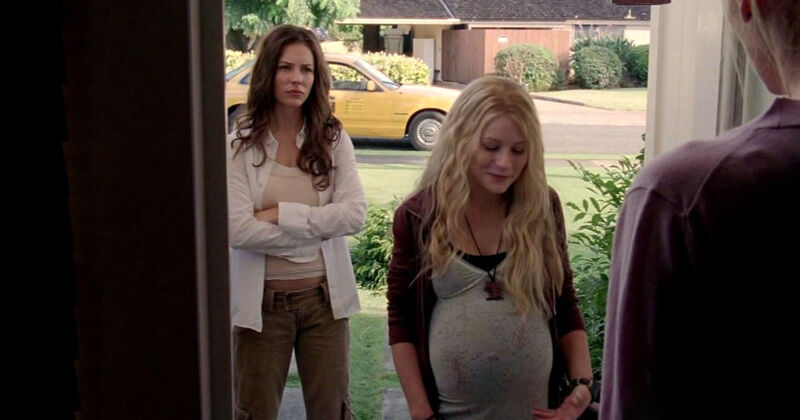
The above is a pretty depressing sight, the thought of no more LOST for 8 months. The mark of every season finale is both an annus mirabilis (for it's a celebration of the past season) and annus horribles (the unnerving thought of our beloved showing going dark). And so no matter the fulfilling nature of the season finale, we are left with the television equivalent of rolling a Q in Scattergories - a perplexing and fruitless search for possible answers without having any where near enough ammunition to complete the terrible frustrating task while you pitifully wait for the time to expire and to move forward.

I have written a number of times before that LOST's individual episodes are like a single piece of a mosaic. And this single tile - aptly named "There's No Place Like Home" - was a sweeping epic, emotionally charged and cutting a wide swath across the show's meta-landscape. But it also left me with some questions and concerns as to how the show will evolve from here. I will dispense of my major criticism here before I get into what I though to be a throughly satisfying ending to the fourth season of LOST. Quite simply, I am not buying Jack's grief and burning passion to return to the Island. I just don't get it. Jack didn't broker a deal to get only a handful of the Oceanic Six off the Island. He didn't consciously chose the other five like an elementary school kickball game, leaving the dozens of other survivors on the Island fending for themselves. He - and his Oceanic Six compadres - was lucky to escape alive. There is no shame in not going back for Jin after the freighter exploded and he didn't have a choice to return to the Island for Claire and Sawyer. He did the best he could. Now one could make the argument that Jack's best will simply never be enough (thank you Dr. Christian Shepard for that), but beyond that, I'm not sold on his whole bearded island ambition. Now I suppose we may not have the entire story. Locke - moonlighting as Jeremy Bentham - may have told Jack that Jin has survived, Sawyer is bonking Juliet, and his father is making cameos in a dilapidating (and mobile) cabin, but if the season finale was supposed to convince of us that Jack truly has a good reason to return to the island, mission unaccomplished.

However the scene between Jack (Colonel Free Will) and Locke (Captain Fate) in the greenhouse may be the (symbolic) key to the central themes LOST has so carefully planted along its narrative path. Locke seemed to try and convince Jack that Jack was destined to arrive at the Island, that he was "supposed" to be there. Unsurprisingly, Jack was having none of it and essentially told Locke to shove all his fate sound-and-fury in his own Dharma Station. I wrote a few weeks ago that I thought the Island may be the one place where fate and free will exist simultaneously and with perfect balance - and with Locke/fate and Jack/free will playing out on different ends of the Island. Fate and free will are in mutual need of each other in order to keep the surrounding world orderly, with neither fate or free will having a preponderance of the power. But if Jack and free will depart from the Island, nothing will be there to counteract fate and everything will fall out of balance and into chaos. The chaos apparently ensued and Locke pinpoints Jack's departure from the Island as the seminal moment for these events. As we have seen a number of times on the show, fate/course correction ultimately trumps free will (Locke's arrival at the Island, Charlie's death, etc.), but the two must exist simultaneously - serving as checks and balances - for things to function in an effective, efficient manner. The absence of one throws the other into flux, thus the Island's apparent descent into chaos. One could make the argument that Jack's post-Island life - devoid of fate - has caused him his anguish. And what if Jack's fate truly lies in the Island? Christian's appearance both in Jacob's cabin (along with Jack's half-sister, Claire) and his exceptionally eerie dismissal of Michael suggests a higher communal relationship between the Island and the Shepard blood line that Jack blindingly rejects. Regardless, this is all WILD SPECULATION in an attempt to explain Jack's bearded future and instability.

Also Jack's reason for lying - to protect the ones who stayed seemed a little flimsy - doesn't make oodles of sense, especially if he believes those still on the Island will be in danger if the truth comes out. What makes him believe that they - the Oceanic Six - are going to be safe once they are off the Island and dealing with their pseudo-celebrity?

The other lingering concern that I have is the meta-structure for the show's penultimate season. The post-Island future is now the present and presumably we have yet to see a scene farther into the future than Jack and Ben's nocturnal chat at the funeral home. Which leads me to wonder whether we will see another narrative shift in the coming season. Will the flash forwards/backs be less common? Will we shift between post-Island moving action (in the past) and Oceanic Six present? Or will we again see well into the future early in the season and build backwards like we did in season four? And now that we know how they got off and are left to wonder why exactly Jack wants to get back, has the show lost some of its narrative momentum?

One final lingering concern is that last season ended with the audience knowing that Jack wanted to go back to the Island. This season ended only a few hours further into Jack's evening, leaving the audience with the single wrinkle that Jack needed to bring everyone else back along with him - including a dead Locke? (And Walt too? Does Walt know his dad is dead?). While it is true that the season worked to tie the post-Island future with the on-island present, I would have liked to see the plot's frontier extended a little more. But this may just be me being overly critical - a sort of Manifest Destiny for the plot from a fan's perspective.

Despite these qualms, I really enjoyed the season's conclusion and payoff, which amounted to the Oceanic Six's actual rescue (from Penny, no less) and the journey down to the Orchid in an attempt to move the Island. Starting with the latter, a number of people independent of me think the Island moved only in time and not in location. It wasn't too difficult to see that once Ben moved the frosted gears causing the Island to disappear, that he was relegated to the Sahara Desert. "The Shape of Things To Come" opened with a startled and wounded Ben awakening wearing a parka in the middle of the Sahara. We now know that only moments before Ben had been on the Island playing with the Island's subterranean mechanisms. In the episode's next flash forward scene, Ben is checking into a Tunisian hotel asking the date, which is late October 2005. Since we know the Island was moved in early January 2005 (Desmond called Penny on Christmas Eve), I think it is safe to assume Ben was sent to the same time the Island moved to, but was banished to a location far away. My guess is that the Island hasn't moved locations, but rather it has simply failed to exist between January 2005 and October 2005. Just as you wouldn't be able to find Ben in March of 2005, you wouldn't be able to find the Island during that same time. And just as Ben abruptly reappears in October, the Island does as well. And just so you don't think I am pilfering Doc Jensen's ideas as my own, I'll add further support to the argument he didn't pick up on. In the Dharma video Locke watched as Ben loaded the portal with metallic objects, Dr. Halliwax said that the rabbit would seemingly disappear for 100 milliseconds as he was being sent into the future, during which time he would not exist. The exact same principles apply to the Island's movement and its ability to be seen/located in the interim time period. The other thing about the Island's movement is the resulting light and sound was strikingly similar to the events that followed Desmond's turn of the failsafe key in the season two finale. I'm not going to get into any connection here, but I wouldn't be too surprised if a connection between the button, the release of the mounting electromagnetic energy and keeping the Island for moving forward in time was all related.

Which leads to questions about the scope of what was moved. Jin and Farraday almost have to be alive. They cannot keep killing core characters - especially if one (Jin) is a significant reason Jack would return to the Island. And they almost must have been moved with the Island. Otherwise Farraday would be left with a raft load of red shirts and less than ten gallons of gasoline while Jin would be floating at sea and both would have no where to go. The gaping hole in this theory is that the copter would have been within the radius of the Island's movement (albeit in the air) and it didn't go, so why would Jin (who was the furthers out) or the inflatable ferry? My initial guess is that Jin and Farraday got sent to October 2005 even though Sun believes Jin to be dead - and blames both her father and Jack for the fact.

The other interesting thing about the moving mechanism is to note that Ben had to break through a Dharma station to get at the Island's true power structures. Even Halliwax acknowledged in the above video it was the Island's unique properties that allowed for Dharma to do their thing, not something that the Dharma Initiative consciously and artificially created on the Island. This lends further support to the idea that the Island was discovered and not manufactured; that the Dharma Initiative built their infrastructure on what already existed on the Island and something unique and precious existed long before Alvar Honso set up the DI.

And Ben not being allowed back to the Island? I'm not buying that either. He is too calculating and overzealous when it comes to issues of the Island. I just can't imagine Ben permanently ceding that power to Locke. Maybe he can't return while the current leader of the Others is alive - giving Ben a reason to dispose of Locke. And a few of you (along with myself) have wondered aloud whether Locke got off the Island by moving the Island himself. While that's a possibility, we know there is a way to get off the Island without moving it (Richard, Ethan and Zeke left with apparent regularity) and my guess is that Locke did as well.

But that leaves the lingering and meaty question of what exactly did happen when the Oceanic Six left the Island. One thing that has bothered me in the past few weeks is why Richard Alpert capitulates to Ben and Locke when he has clearly been there longer and has a clear philosophy as to how the Island should be used. It is as if Ben and Locke are the Presidents of the Others while Alpert is the leader of the bureaucracy. I am still flummoxed about this, but my best guess is Alpert believes whole-heartedly in fate and is comfortable with his own fate that he is not to lead the Others, but to serve as Ben and Locke's right handed man. While leads us to more parallels between the Bugged-Eyes One and Mr. Clean.

Ben finally sheds his mensch facade as he killed Keamy out of rage and anguish over Alex's death, condemning the folks on the freighter to death without any remorse ("So?"). What was different here was Ben did not even attempt to keep his hands clean of the spilling blood - a sharp departure from his previous perspective. He reacted out of blind revenge and with a singular selfish goal, much in the same way Michael acted towards the end of season two - an interesting parallel considering Ben was in fine form blaming Michael for Libby and Ana Lucia's death while maintaining his moral high ground during "Meet Kevin Johnson". All of this draws striking similarities with Locke's disposition which I probably should have picked up earlier on. Locke doesn't want to do his own dirty work - he was never able to fully stand up to his father and duped Sawyer into killing him for Locke and then taking credit for it himself. He sabotaged Jack and Juliet's ride off the Island by blowing up the submarine but continued to maintain his moral innocence. This combined with his verbal stab at Jack ("If you lie to them half as well as you lie to yourself, they'll believe you") makes me believe he is the perfect replacement for Ben.

A few quick things. I think there is a reasonable chance that Charlotte is Annie - Ben's old Dharma friend - or related to her. I think Claire is dead and died during the night she, Sawyer and Miles camped - as Miles could sense the impending death on their jungle hike which would explain his increased interest in Aaron's ma. The reunion between Desmond and Penny was pretty spectacular, although it makes one wonder how much we will be seeing Desmond over the next two years. And that Sun and Widmore's common interest is finding the Island.

Depending of whether or not I feel like writing about LOST next week, I may have a season recap. But regardless, I am going to have to find something to blog about for the next 35 weeks. Any and all ideas are appreciated.
Sunday, May 18, 2008

This Would Have Been A Perfect Time To Pull the "Mission Accomplished" Banner Out of the Closet


A few of you who I know read regularly were less than pleased with Thursday's episode of LOST, frustrated with the slow pacing of the show and how it seems as if we have been in a holding pattern for the last three weeks. While that is understandable, I'm going to defend the show and "There's No Place Like Home, Part I". First off, this was the opening hour of a three hour season finale, so in effect we saw the opening twenty minutes. There's no way the episode's merit or worth can be judged at this point. The counter (and valid) argument to that is LOST - more than almost every other show on television - is just one big episode because of the serial-nature of its story arc, so the line of demarcation week-to-week is almost negligible. The other predicament LOST's writers find themselves in is the show's massive scope and the large footprint of all encompassing episodes. And by that, I mean LOST has the decision to focus on one group (the freighter folk, the beach crew, Locke's comrades, etc.) in depth - which would get people angry that they didn't see what the hell else was going on with the other characters - or they could give the audience a smattering and taste of each Island course - and the criticism would be that "nothing happened!" and that the show was too jumpy and disjointed. Honestly, they can't win. And on Thursday, they decided to go with the latter, more epic approach - which is the appropriate decision for a season finale. The problem is that they are fighting on six fronts - the freighter, the beach, the Orchid-journey, the Jack/Sawyer's jungle trek, the Sayid/Kate trip and the future. With 42 minutes and five different areas to cover, that gives each group about 7 minutes a piece on average. That's not a whole lot of time to do anything substantial. But I thought the first third of the fourth season's finale was effective, interesting, and compelling.

The most striking thing to me was the state of post-Island Jack. Jack seems desperately and foolishly invested in the Oceanic Six's bundle of lies, like the captain of a doomed mission who feels the need to keep the morale of the crew high as they toss buckets of water overboard. His cold, calculating reassurance on the cargo plane on their way to meet the families provided a striking relief to his on-Island "live together" leadership - Jack still asserted himself as the point man, but seemed to plead with the other four adults to buy into his plan. The striking press conference scene further establishes the deck of cards engineered by Jack that we know is going to tumble in their future. And the realization of Claire being his half-sister and Aaron his nephew at the end of Papa Shepard's funeral struck at Jack's core. I know it wasn't earth shattering news for the audience, but we needed to see Jack's realization at some point, to see how his tenuous grip on an uncontrollable situation began to unravel. Jack is marinating in his lies - about the rescue, about Aaron's relationship, and again about his father. His empty words at the funeral echoed his later exchange with Kate in the hallway after reading to Aaron. Try as he might, Jack cannot shake the overbearing hand of his father, which can provide a proxy for Jack's reaction to his post-Island decisions. Try as he might to shake the decisions that lead him off the Island, the burden of knowledge and his past is too great to bear.

But Jack isn't the only one with father issues. The post-Island world belongs to the mothers as was made clear in the opening scene. Jack was greeted by his loving mother, Sun didn't even acknowledge her father as she hugged her mother, Hurley's strained relationship with his father was never entirely forged, and Kate - a new mother herself - found no warm comfort after debarking the plane, only the realization that she would be responsible for maintaining a relationship with her adopted son that she was unable to sustain with her own mother.

Sun's visceral reaction with her father and again with her potential game-changing acquisition of a stake in Paik Industries will likely play a large part of the next few seasons. I've thought for a while now that Sun's father could be the Korean parallel with Widmore - whether he is looking for the Island or not, I'm not sure, but the parallels between Penny and Sun are striking. And either the Oceanic settlement was ridiculously rich, the show had a logic gap or Sun was receiving third-party help to initiate a hostile infiltration of Paik Industries. My guess is that Penny is playing venture capitalist, providing the seed money to Sun in an attempt to leverage the two's paternal companies in an attempt to find the Island and their loves. The scene reminded me of the end of Batman Begins when Bruce Wayne has bought a controlling ownership of Wayne Enterprises to the surprise of Mr. Earle.

There were a number of smaller things I really enjoyed about the episode. I love how Sawyer called Jack out on his one-note song, telling him he sounded like a broken record about his insistence to get off the Island using the freighter folk. (This is particularly entertaining because I'm not convinced of Matthew Fox's range of acting ability so his character's single dimension could also be his own.) Sawyer's nice dig against Jack saying how Locke was right about the disastrous intentions of the freighter folk and how the "running through the jungle with a phone" routine didn't work must have grated the stubbled doc, sending him out to prove himself once again before Sawyer joining with Sawyer joining him, saying "you don't get to die alone."

The Michael and Jin/Sun interaction on the deck of the freighter was amazing and strained. The thinly veiled assertion that "Jesus Christ is not a weapon" was pretty entertaining social commentary.

The realization that Keamy's arm band was actually a detonation button for the C4 on the freighter was pretty vital.

The return of seemingly angry and disgusted Alpert was a nice added touch.

The numbers on the dash that sent Hurley barreling down his street seemed gimmicky, but I suppose they make sense. I also love how Hurley is frequently used as the voice of the fan, asking the literal questions we want attacked - like "What about - you know - the whole being dead at the bottom of the ocean thing?" late last year after Naomi parachuted onto the Island. He served the same purpose this past week on his trek to the Orchid, wondering aloud (as I did last week) "If we move the Island, wouldn't the dudes with guns move with us too?" Ben's curt response dripped of contempt for Hurley's (and our) limited mind, perhaps an unconscious reaction to how the writers and producers react to each to the antsy, limited and unyielding onslaught of questions they must get on a daily basis.

One thing that I think gets overlooked in a number of episodes, but was exceptional this week was Michael Giacchino's score. It is at its best when it can be sweeping and epic, like the end of this week's episode with the slowed shot of the freighter, Jack/Sawyer, Ben's surrender, Kate/Sayid and the Others, and Locke's move to the Orchid station. It's often overlooked, but was exceptional this week.

I do wonder why one of the questions from the reporters or one of the points of clarification during the press conference didn't relate to the plane that was found at the bottom of the ocean. That seems like a pretty natural question...did the O6 make it out of that wreckage before it went down and how does the fake plane's resting place compare with the supposed home for the Oceanic Six? Who is the other responsible for Jin's death? And how can Sayid be so certain that no other survivors will be found? And just as we got to explore the Looking Glass Station during last year's season finale, this year we will get an eye-full of what the Orchid as to offer. The second two-thirds of the season finale doesn't air until May 29th, so not only will we need to wait for that, I will have to figure out something else to blog about this weekend.

Sunday, May 11, 2008

John Can See Dead People, But Of Course Not Jacob


First off, a non-LOST observation. If you haven't seen Iron Man and are planning on seeing it, skip to the next paragraph, but if you have seen it, I have a question. I cannot understand why the Afghani terrorists would ask Tony Stark to build the Jericho Missile if they were already dealing under the table with Stark Industries rogue CEO. If they didn't want to kill him so that they could use him for leverage in getting more money or weapons from Stark Industries, that's fine. If they didn't know they were supposed to kill Stark and really wanted the Jericho - then just demand that as payment for offing the industrialist. But why would they EVER ask him to build anything if they were already getting it or on the cusp of receiving anything for killing him?! It makes absolutely no sense. If someone can give me a reasonably plausible explanation as to why the terrorists not only kept Stark alive, but asked him to build something, I will buy you lunch.

And now on to this week's LOST. I know a few of you who read this regularly are either going to be surprised that I didn't find "Cabin Fever" all that satisfying or just out-right angry that my little brain is too microscopic to appreciate the nuances of the show and to see the episode for what it truly is. That being said, I was awfully disappointed. I have written before that the set-up/payoff cycle works for LOST in that it allows for the show to alternate between examining character development and turning the answer faucet from drip to a more steady stream. My issue with "Cabin Fever" is that it didn't really do either - nothing was answered (it was actually significantly more muddled) and the emotional footprint of Locke's past did not expand beyond the boundaries of what we already knew. The episode was rather dimensionless. We already knew that Locke was special, that Locke was chosen, and that Locke's fate was to arrive at some point on the Island and partake in his spiritual walkabout - in fact the fourth episode of the first season did a pretty good job establishing these themes. This most recent episode only rehashed them - although some rather absurd curve balls (even for LOST) were thrown in. We now know Alpert was chasing after Ben from an early age and Abaddon met John between his accident and the 815 crash...which to me doesn't mean much beyond this...

Locke for a long time has tried to exercise free will over his own life. He insisted that the knife Alpert brought was his even when the timeless rho-chi implored him to choose one of the remaining items Locke had not yet dismissed - the baseball glove, the Book of Laws and the comic book. As a high-schooler, John refused to attend Mittelos Biosciences summer camp, defiantly telling his adviser, "Don't tell me what I can't do." John even refused to listen to Abaddon who suggested the much needed walkabout for himself - all examples of John clinging to free will while delaying fate from taking over. But Locke can no longer do that. Locke's stranglehold on free will ended when 815 crashes onto the mysterious rock - the biggest course correction experiences thus far in the show. It's like Charlie's death - just as Desmond could keep Charlie alive for only so long, John could only avoid the Island for so long before course correction took over, ironing out pass attempts to exercise free will. For Charlie, it was death. For Locke, it was his arrival to the Island. And from John's arrival onward, he has relinquished himself to his fate - at least mostly. John's insistence on not pushing the button at the end of season two was a dangerous regression into exercising his free will. But beyond that, Locke has laid down his arms against fate and allowed it to guide him on the island. He has used it as rationalization for more than a few things - for initially pushing the button, for the death of Boone, and for his apparent communal understanding with the Island's zeitgeist. And he used it again at the end of Thursday's episode, telling Christian Shepard, "I am here because I was chosen to be." (not "I am here because I choose to be.") Which Christian responds to be saying, "That's absolutely right."

It is as if the Island is a place where fate and free will exist in perfect balance and parallel and the audience is seeing the two diametrically opposed philosophies play out on the Island - with the benefits and consequences of both being explicitly explored. Locke and Ben's corner is exploring the phenomenon of fate while Jack's beach dwellers try to play out an exercise in free will. This acceptance of his own fate has allowed for Locke to ascend into his rightful throne at the expense of Ben's position while Jack and crew cling to the power of free will.

Which raises a string of questions. Why is Ben capitulating to Locke, allowing for Locke to commune with the Island Ben has so zealously protected? And why was Ben even in that position if the Dharma Initiative killing was not Ben's idea, but rather the Others' former leader? And why couldn't Ben have been marginalized if he wasn't the Others traditional leader? We already know that Alpert has a far different philosophy for how the Island should be used than Ben (that is why Alpert gave Locke the file showing that Locke's dad killed Sawyer's parents) so why wasn't Alpert the natural post-purge leader or able to unseat an increasingly unstable Ben? Unless Ben is to Jacob as Locke is to Widmore - both pawns being used to manipulate the Island's future to the advantage of the island's two competing Zeus. And Ben realizes that the only way to cut Locke's puppet strings of a fate (which stands to reason benefit Widmore) is to abdicate his seat on the right hand side of Jacob's throne. And that would be the reason Ben allows Locke to enter Jacob's cabin alone. What the episode was successful at what drawing a stronger parallel between Locke and Ben, especially regarding their births - both had mother's of the same name who screamed out their son's given name immediately after birth and who soon found themselves apart from their baby boys - through death in Ben's case and adoption through Locke's. But I didn't feel like these "new" parallels were enough to drive the show into uncharted emotional territory. Meanwhile, Ben's continual insistence that he is innocent is driving me nuts. As someone pointed out to me earlier this week, Ben is not exactly the mensch he claims to be. He cannot be entirely detached from all of the surrounding chaos and escape any type of responsibility.

Which brings us to a brief discussion about the cabin scene. The two previous trips to the cabin were two of the creepiest and most memorable scenes in the LOST canon. This one however was less mysterious and more let-down. The elements of fate were again at play here, most explicitly when John said why he was there and again when Locke asks where Aaron is, with Christian's reply being "He's where he is supposed to be." Claire almost has to be dead. There is nothing in her character that indicates she would just leave Aaron anywhere, especially since she spent most of the first three seasons of LOST screaming things about her "BEHHHHH-BEEEE!" She also looked high as a kite, probably breaking open some of those virgin Mary dolls with the heroin inside of them as a way to feel closer to Charlie. Maybe only those within the Shepard's bloodline have a communal nature with Jacob, but that seems pretty tenuous to me. And Locke's marching orders from the cabin - "to move the Island" - could mean either in location or time. Either way, I don't see how it would save anything since the helicopter-bound Keamy is already over the Island.

A few more things. We have come to anticipate - and expect - that the first half of season's would be overly mysterious with the second half serving as an answer payoff that at least clarifies some of the more medium sized questions. This is what made the second half of season three so enjoyable. This past episode not only didn't clear anything up, it effectively threw mud all over this structure. The timeline of the Island lagging behind the outside world and water was shot to hell when the doctor was killed well after he washed up on shore. There was no further clarification about Jacob and certainly no light on the boat, which has justed turned into a constant rabble-rabble that seemingly lacks any type of genuine drama. And my only non-explosive guess for what was strapped to Keamy's arm is a device that faciliates the time-travel Ben takes from the Island. The only evidence for that is the logo on the Plan B document was the same Dharma logo that was on Ben's parka at the beginning of The Shape of Things To Come".

My guess is that the long-teased and much hyped Orchid Station (where the rabbit video was shot) is the one place Ben could go if the Island was in grave danger - and now thanks to Plan B opened from the ship's safe - Keamy knows where it is too. Hopefully it surfaces over the next two weeks. And brings with it some long-sought and much needed clarification on more than a few fronts.

I promise a non-LOST post in the next week or so as well.

Sunday, May 4, 2008

If it's not broken, Jack won't touch it.


Before I start a brief analysis on this past week's "Something Nice Back At Home", I want to return briefly to the tete-a-tete between Ben and Widmore. It has always stuck me as strangely as to why the Freighter Missionaries aren't threatening - and have orders not - to kill Ben. He clearly needs to be alive for some reason. And during his midnight liaison with Charles, Ben ominously says, "we both know I can't do that" responding to Charles inquiry whether he has arrived to kill him, indicating that Ben also needs Charles alive for some reason. But why? Why can't Ben just eliminate Charles if he knows where he is? It seems that it would save him tons of time, energy and concern, while protecting the Island. My thinking is that Ben is Charles constant and Charles is Ben's. Admittedly there is little current evidence to support this theory, but it would go a long way to explaining why they need each other alive and how Ben stomachs his apparent location/time travel treks off the Island. If anyone has any thoughts on this, please let me know. I'd love to discuss. Now onto this week's installment of the trippy, tropical adventure.

I wrote earlier this year that the fourth season of LOST was settling into a predictable routine - Season 1-esque character build/plot set-up, mythos-changing and answer revealing pay-off, followed by the cycle repeating. I think "Something Nice..." fit well into the routine, as it focused on Jack's evolution - or rather devolution - while bridging the character's differing Island-present and post-Island future as well. It also set many of the pieces in place for the season's final push (Jin's agreement to get Sun off the Island, Claire gone missing, the departure of Keamy and crew from the Island, etc.)

With the heavy emotion focus on post-Island Jack this felt the most like a Season 1 episode - eye-opening first scene included! - where "answers" took a backseat to the character motivations and complexities. And we again saw the over-zealous, paranoid Jack that destroyed his first marriage and relationship with his father. We now know how Jack went from happy-go-lucky pseudo-celeb after his Island return to grizzled alcoholic whose relationship with Kate had become strained. Jack MUST have something to fix, so he breaks what he can - his relationships with his dad, Sarah, and now Kate - through his own destructive ways. There were signs that Jack was sliding backwards even before his shotgun proposal to Kate. The Red Sox had once again lost to the Yanks as it recalls one of his father's favorite sayings - his return to the heavy drinking, his smothering paranoia surrounding Kate (who he views more of a possessed object than a worthy pursuit), and the haunting echo of his father's heavy hand. When he steps on the Millennium Falcon toy in the kitchen, Jack's "son of a bitch" response isn't really the way you'd expect him to refer to his half-sister and nephew, which is ironically tragic for the audience if Jack does not yet know his relation to Aaron. The MF's pilot - the rogue Han Solo - easily could be paralleled with the Island's maverick Sawyer. As Jack leaves the kitchen to join Kate in the shower, the camera lingers on the toy and newspaper, a harbinger of Jack's troublesome, insecure past that returns to haunt him and failures he has yet to learn from.

Which brings us to a number of quick takeaways from the episode. First, who was Kate with while Jack was home downing three beers, a bottle of wine and a glass of hard liquor? My guess - and I'm not the only one who thinks this - is that Kate was closing some loop with Cassidy, the mother of Sawyer's daughter who crossed paths with the fugitive and helped connect Kate and her mother.

The reason Sawyer couldn't do it himself was presumably because he was still on the Island, but the new wrinkle on that was when Jack indicating that Sawyer chose to stay behind on the Island, rather than returning to the mainland. This is the first time that anyone said those remaining on the Island had a choice as to whether they should leave or stay - an interesting dynamic to see play out in the next few weeks because it seems that more than six would choose to leave if offered the opportunity. And if it were a choice, why are the O6 lying about the survival of their remaining 815 compatriots? I'd think this will be clarified in the coming weeks.

And what's the deal with Jack's dad? Jack spoke of his father in the past tense after finishing the second chapter of Alice In Wonderland to Aaron - saying "he was a good story-teller" - but the white tennis-shoe wearing AA member keeps showing up. His appearance on the Island to Claire could be just chalked up to the visions others have seen - Eko's brother, Kate's horse, Boone, etc. - but the seperation between Claire and her child along with the fact that Miles saw Doc Christian added a new wrinkle into the story. I still don't think he's alive and most certainly he is not around Jack's post-Island life in any physical sense, but something weird is going on. I know that's a real insightful statement I just made.

Three other quick things. If the Island has some control over the 815 survivors, why is it (seemingly) leaving Kate, Sayid, and Sun alone while tormenting Jack and Hurley? Why wasn't the Smoke Monster more effective in killing some of the Freighter assassins? Did Ben program it not to kill so that Ben can continue making the claim that he is not a murderer? And who else was disappointed that Rousseau was actually dead? I thought that was a wasteful end to one of the show's more intriguing characters. Her death - unlike Boone's or Charlie's - meant nothing in the larger scheme of the show's web or character development. It seemed poorly executed and an indistinguishable way to send her off the show.

Hopefully next week's episode takes us to Jacob's castle - it's called "Cabin Fever" (!) and gets Desmond a little more screen time.

Sunday, April 27, 2008

Awesome Episode? Or Awesomeist Episode?


As much as I enjoy writing about Miss Scarlet and the appeal of comic book films, nothing is as much fun to write as post-LOST episode musings filled with irresponsible speculation. After an involuntary five-week hiatus caused by the writer's strike this fall/winter, LOST returned with one of its richest, most exciting and spectacular episode ever. "The Shape of Things To Come" illustrated what LOST at its best can be - revealing, emotional, thought-provoking and fun. Once the announcement was made that LOST would produce eight episodes worth of material in six episodes, I wonder aloud how the pacing of the remaining season 4 episodes would change and how it may be exactly what fans were hoping for in terms of accelerated payoff. "The Shape..." clearly answered that question and did so for the better. I viewed the episode not so much as a door-opening, game-changing journey - although there was plenty of that - but more of a bridge between on-island life and post-island exploits. Here are a bunch of quick hit takeaways and observations from an episode that joins "Walkabout", "The Hunting Party", "Through the Looking Glass" and "The Constant" atop the show's Mt. Olympus.

Alex's Execution

Cold, brutal and startling - and probably the most unexpected television death since the final seconds of 24's first season. This may seem overly simplified/obvious, but what surprised me about Alex's execution is that it actually happened. Alex was perhaps the final instrument of leverage the Freighter Folk had to get Ben to cooperate. By killing her, they sacrificed their high ground and opened the door for Ben to unleash Pig Pen's brother onto them without worry about harming his daughter. It seems short-sighted and rash and makes me wonder if Keamy actually wants to get Ben alive or whether alive is preferable, but dead is still OK. (Note: This could also be explained away if the actress who portrays Alex requested more time to appear in Maroon 5 videos.) Regardless, the execution-style slaughter, Ben's "He changed the rules" reaction and the resulting hell unleashed upon the camouflaged-clad killers made for compelling television.


Smokey/Pig Pen

Holy Hell. I'm not sure what to add here, but it clearly appears that Ben has at least some sort of control or influence over the enigmatic Smokey. After returning from his hidden room looking like Santa after he traveled down a recently used chimney, my favorite black character on LOST (sorry, Rose and Abaddon) unleashed a focused hell upon the freighter assassins. Like its appearance late in season three when it appeared to snap photographs of Kate and Juliet, Smokey flashed multiple times as it ravaged the tree line just outside of Otherville as the 815ers and Ben stood watching. I can't imagine Ben has complete control over Smokey, much like my parents don't have complete control over their black labs, but both Smokey and the labs can be dispatched periodically with a specific mission, such as "Go terrorize those people" - which both Smokey and the dogs respond to. Anyway, it was another small, but important piece to the mosaic that makes up Smokey's story and purpose. It also makes one wonder what other tricks Ben can pull in his little room. Like...

Ben's Traveling

I am hesitant to speculate much about Ben appearing to be able to travel instantaneously around the world, but this will most certainly come to play in the next handful of episodes. What I will do is direct you to this video released by the exec producers this past summer about a yet-to-be-seen/located Dharma station. The name on Ben's parka when he arrives in the Sahara corresponds with the doctor's name in the video - Halliwax. What I also found interesting about Ben's travel-portal abilities is that Sayid is apparently unaware of them when he confronts Ben in Tikrit, asking quite pointedly how he got from the Island. I have always thought that Ben got the Oceanic 6 off the Island in the same way that he travels from the rock to the mainland, but that apparently isn't the case. I'd be open to ideas about how and who exactly gets the Oceanic 6 off the Island if anyone has any because it isn't looking like Ben any longer and the Freighter Foursome are becoming more trouble than they are worth.

Sayid's Transition Into Hitman

When I say that "The Shape..." serves as more of a bridge than as a unveiling of a new frontier, the clarified post-Island dynamic between Sayid and Ben is the best example of my thinking. We now understand why Sayid has signed up as a foot soldier in the war between Ben and Charles Widmore - the murder of Sayid's wife Nadia in LA pushed him over the edge and into Ben's camp. But I'm not convinced that it was a Widmore associate who murdered Nadia. I think it makes a lot more sense if Ben had orchestrated that in an attempt to recruit Sayid to his side. We know Ben is a master manipulator and Sayid's contention at the end of "The Economist" when Ben was treating Sayid's wound ("you used her to recruit me into killing for you") at least hints at the possibility that Sayid now knows Ben had some knowledge of Nadia's murder one way or another. My guess is that in the elapsed time between the end of "The Shape..." and "The Economist" Sayid becomes aware of Ben's involvement in Nadia's death, but continues to work for him because of another reason - perhaps the continued safety and presumed release of the remaining 815 survivors still on the Island. I have a few issues with my own theory here and how it matches up with what I have previously written about, but it is a little too complex to try and type out so if you are REALLY interested, you can ask me in person.

Widmore/Linus Showdown

As I have written before, my favorite scenes in LOST deal with Jacob's cabin and the interaction between Locke and Ben. But the closing scene of Thursday's episode was both poignant, important, and beautiful. While it didn't have the same shock value as the flash-forward reveal at the close of season three, it was the LOST equivalent of Khrushchev and Kennedy meeting in the same room to discuss the Cold War. It was a wonderfully shot scene - Ben in all black, Charles in white; a frequent motif on the Island - with half shadows and chilly, cutting dialog. Here's to hoping that this isn't the last verbal spar between the master puppets in the theater to determine the Island's fate and ownership. And the chilling revelation that Ben was on the hunt for Penny evoked an audible gasp from my girlfriend and left me more than a little surprised and intrigued at the prospect of Ben keeping LOST-madness champion Desmond from his life's love. Lingering questions from the scene: why can't Ben kill Widmore? What previous involvement with the Island did Charles have? Where could Penny be hiding that makes Charles so certain of her safety? And if Ben and Widmore know of each other and interact, why would Sayid be used as a mechanism for getting at/locating Elsa's presumed boss during "The Economist"?

And just to clarify what Hurley had to say regarding Risk, Australia is actually the least important continent in the game.

A solid, fantastic, and splendidly woven yarn reminded me again as to how much I enjoy - and missed - LOST. Any thoughts from you are welcome and appreciated.

Monday, March 24, 2008

If Mikhail is Rasputin, then Michael is Wile E. Coyote - persistent yet epically incompetent

Because of a trip home, I missed my normal Saturday early afternoon window for a re-watch of LOST and a post on the episode, so I apologize for this being a little later than usual as a few of you have pointed out. Anyway, I have lots of little thoughts on the mostly satisfying "Meet Kevin Johnson", an episode that reminded me of "Flashes Before Your Eyes", but maybe that is only because the flashback in both occupied almost the entire episode - although I do feel like it was time well spent.

We'll start with "WAAWWWW-ELLLLLAWTTTT!"'s dad. As I pointed out last week, I am not a huge fan of Michael and wish that Jin had rearranged his face Mr. Potato Head-style now, especially since Jin's watch was used to pawn a gun in order to commit suicide, an act Michael can't even effectively complete. Seriously, can this clown do anything right? I was impressed with the performance of the post-Island Michael and his strained relationship with the son he desperately wants to be a father to. That being said, I couldn't entirely buy his motivation for accepting the ride on the Flying Dutchman. Perhaps the producers painted themselves into a corner on this one, but it was tough to swallow. Michael is dangerously single-minded, his only goal being getting Walk back. Fine. Michael gets on the freighter to help his fellow 815 survivors and subsequently redeems himself for going Hannibal in the hatch, and is then reunited with Walt who realizes that his father is a hero. Fine. I buy that. What I don't buy is that Michael would get onto the freighter thinking "OK, I am going to show Walt what a redemptive soul I have by blowing up the entire ship and its crew, including myself, but never get to be reunited with my boy." That doesn't make any sense. Why would he want to continue on his suicidal path if he sees a way to right wrongs and ultimately show Walt the man his father truly is? Suicide before he meets Zeke in the alley = OK. Suicide afterwards = no sense. This was the most difficult part of the episode to swallow and it served as an obstacle from truly suspending my disbelief, a vital buy-in when you are watching LOST.

That being said, we now know why Jack could jump off the bridge on-ramp in the opening minutes of the season three finale - the Island wouldn't let him. This is also the second time "the Island" is said to have some mystical, controlling power off its rock - Hurley made the first allusion shooting hoops at the end of the season premier. I'm not sure where this is going, but it is an interesting thread to keep an eye on.

A couple more things Michael related. Zeke acknowledges that the Others have been keeping tabs on Michael since he returned to the mainland. This is the second time in three episodes - along with the Widmore beat down caught on tape - there has been an indication that the Others have an active network off the Island that serve some unknown purpose beyond 815 survivor espionage. Again, no huge insight here, but important to note and keep tabs on. How do they get off the Island? Was the sub the only way? I still think there is a landing strip somewhere on the Island.

I also think Michael gets stuck back on the Island, otherwise he would have been hailed as a member of the Oceanic and used that opportunity to serve as his coming out party - although the logistics of doing that and including Walt so he wouldn't have to hide in his bedroom under an assumed name could be difficult. And while Sayid coldly outed Michael to Cap'n Gault, I'm not entirely sure that the big guy didn't already know that Michael was an 815 survivor. Sayid clearly doesn't think Michael can be trusted more than those on the freighter and his nicely written - but cryptic - note about not trusting the captain clearly didn't do the trick. And I loved Ben's chilling reminder that Michael killed the insufferable Ana Lucia and tender (yet apparently mentally unstable) Libby. Speaking of Libby, I hope her brief flashes in Michael's conscious serve as a harbinger of future appearances. I still hold out hope that she has more impact on LOST's overarching story motif. We still don't know her last name.

More confusion on who put the plane at the bottom of the Pacific. This week evidence was shown to implicate Widmore as the reverse treasure hunter, but I'm still not sure you can discount Ben as the culprit. First off, that "evidence" was sort of flimsy and easily falsified. And why exactly would Widmore want the flight data recorder if it exposed the wreckage site as a fraud? There is always the possibility that the flight data recorder supports the crashed and sunk at sea with everyone aboard sequence of events, but by no means do I think the photo and order form discounts Ben/the Others from staging the 815 fuselage. When Lapidus was discussing with who he believed to be Kevin about 815, Lapidus subtly indicated that he is the reason that Widmore doesn't believe that 815 has been found. This web is getting awfully tangled.

Finally Rousseau and Carl. Carl was a logical choice to bite the bullet, a peripheral character who is clearly expendable, but Rousseau's death seemed sloppy and ill-timed, much like Eko's (although there were other reasons as to why Eko needed off the show). I had always hoped for a Rousseau back story, recounting her first few days on the Island, the illness that her fellow crew members succumb to, and properly placing her tile in the larger LOST mosaic. Her untimely end will not likely afford ourselves that opportunity and her storyline will almost without question feel incomplete. While I think most people will assume that Ben deliberately sent the trio into an ambush to separate Alex from her mother and dispose of the troublesome Carl, I'll leave you with an alternative theory...Cap'n Gault and Widmore have sent Lapidus and Keamy to the Island in order to capture Alex so that she can be used as leverage against Ben. We don't know where the helicopter has gone off to (one can assume the Island) and there's likely a reason to have shown Keamy practicing his shot off the side of the boat during the episode...

Also, if you want to irresponsibly speculate how Aaron ends up with the Oceanic 6, take a closer look to the preview shown at the end of the episode. 30 days until a new episode. It is going to be very interesting to see how the final five episodes of the season are paced.